
By - Todd D. Martin Wilson Tool International
This article discusses factors that contribute to a formulation’s compactibility and ways to mitigate compactibility issues in a tableting process.
Compactibility is the ability of a formulation to form a tablet of adequate strength. A common challenge in oral solid dosage manufacturing is making good tablets with a poorly compactible formulation. Before looking at ways to mitigate compactibility issues, it’s important to understand the factors that contribute to a formulation’s compactibility.
Factors that influence compactibility
Understanding your formulation’s characteristics is key to ensuring good tablet compaction. The following factors play an important role in a formulation’s compactibility.
Compressibility. Compressibility is a formulation’s ability to undergo volume reduction under pressure. You can measure compressibility with a Heckel plot, using the equation:
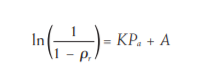
Where ρr is the compacted density relative to the bulk density;
- Pa is the applied pressure
- K is the slope—the yield pressure’s reciprocal—with lower values indicating harder tablets
- A is the slope intercept
To conduct a Heckel plot, you must measure the formulation’s true density, preferably with a helium pycnometer [1]. The area under the curve represents the volume reduction—compressibility—and the yield pressure is inversely related to the material’s ability to deform plastically. You can use the results to compare excipients’ properties and help optimize the formulation. For example, a high slope value (K) indicates that the formulation doesn’t easily deform plastically and can benefit from adding a binder that does, such as povidone [2].
Particle size. Generally, small particles have better compressibility but poorer flowability [3]. Large particle sizes can improve compactibility [4], but a high percentage of fines is detrimental.
For most materials, an optimum particle size exists for the promotion of fragmentation. The size where fragmentation begins to occur is called the brittle ductile transition. By first sieving the material, you can compare compactibility profiles using different particle sizes [5].
Fragmentation. Under compaction pressure, particles will deform or fragment; in many cases, both occur simultaneously. While both mechanisms increase the surface area of mating surfaces for bonding, fragmentation generally provides a stronger bond because it creates new surfaces untouched by the formulation’s lubricant.
Deformation can be plastic—irreversible—or elastic—returning to the previous shape after pressure release. Elastic deformation is always present to some degree, but minimizing elastic deformation is desirable for tablet strength.
Some materials have different crystal-hydrate forms. These hydrates differ in their stability and ability to fragment. When sourcing excipients, be sure the hydrate form is suitable; for example, not all lactose is the same, and some types provide better compaction than others.
Particle shape. For flowability, an ideal particle shape is a smooth sphere. Long and needle-like or flat discshaped particles exhibit poor flow. A rougher, slightly irregular particle shape is more advantageous for compaction. Milling or recrystallizing an active pharmaceutical ingredient (API) may help to get its particle shape closer to a 1:1:1 aspect ratio and improve compaction.
Strain rate sensitivity. Strain rate sensitivity is the percentage difference between the yield stress of a material measured at a high compression rate and at a low compression rate [5]. Fragmenting materials show low sensitivity while plastically deforming materials have high sensitivity. Higher production speeds are more obtainable by optimizing particle size above the brittle ductile transition.
Permeability. The ability of air to escape during compaction is related to the formulation’s permeability, which is a function of particle size and void fraction. Larger particle sizes and void fractions increase permeability. Formulations with high bulk density tend to have lower void fractions and lower permeability. Use the Darcy equation to compare permeability for powders:
- Where Q is the airflow rate
- k is the permeability
- A is the tablet cross-sectional area
- ∆P is the pressure difference
- µ is the viscosity
- L is the cylinder height [3]
Moisture content. Adding moisture to a formulation often increases tablet strength.
Flowability. To measure a formulation’s flowability, use Carr’s index: [(tapped density - bulk density)/tapped density] x 100. In many cases, a better flowability can lead to poorer compactibility, so striking a balance is desirable:
- Excellent = 5-10
- Good = 12-16
- Fair = 18-21
- Poor = 23-28
Another common method to measure flowability is angle of repose, which is the angle in degrees from horizontal that a material forms when piled on a flat surface. The angle given is an approximate one.
- Excellent = 25-30
- Good = 31-35
- Fair = 36-40
- Passable; may need help = 41-45
- Poor; must agitate = 46-55
- Very poor = 56-65
- Not usable > 66
Binder and lubricant. A high percentage of binders and a low percentage of lubricants in a formulation improves compactibility.
Mitigating compactibility issues
Now that we’ve covered the factors that contribute to a formulation’s compactibility, let’s examine some ways to mitigate compactibility issues.
Quality by Design (QbD). Experimentation at the R&D stage is much less expensive than in the manufacturing stage. R&D should collaborate with manufacturing and strive to provide a robust process that provides good quality tablets while accommodating the expected variations inherent in manufacturing.
Allow the process to be flexible for continuous improvement. As part of QbD, develop and submit a multivariate array of critical parameters instead of fixed ranges.
Mixing. Optimize procedures to prevent segregation of different particle sizes within a batch. Overmixing can lead not only to segregation but also to overworking the lubricant into the mixture. Blending before adding the lubricant is often helpful.
Granulation. To improve a formulation’s performance characteristics, often you must forego direct compression and granulate the formulation using either dry or wet methods. Granulation joins particles to form larger, irregular agglomerates that compact more easily. Wet granulation, however, may change the API’s crystalline structure due to the presence of solvent.
Storage. Storing a mixture before compression can change its material properties. Common changes include alterations to moisture content and caking. Sitting in storage can also apply consolidation stress to the formulation.
Minimize caking by reducing formulation storage time and the height of the storage drum. Particles near the bottom of the stored material receive more consolidation stress than particles near the top. Tumbling the drum after storage can reduce caking effects by redistributing the formulation throughout the drum. Storage should always be in a room that’s climate-controlled for both temperature and humidity.
Tablet design. Optimize tablet design to help compress formulations with poor compactibility. Generally, a flatter cup profile can improve tablet-hardness uniformity.
Scaling the tablet’s proportions becomes more important with poorly compactible formulas. If your tablet is too thin or too thick, you will have more difficulty achieving target hardness.
For convex tablets, the tablet thickness should be approximately 4 to 5 times the tablet cup depth and approximately two-thirds of the tablet’s width, although you may need to adjust those proportions for large dosages.
Tooling design. Optimize your tooling design. For formulations with a high strain rate sensitivity—which perform better at slow press speeds—increase the size of the punch head flat to extend dwell time and improve compaction.
For formulations with low permeability, increasing the clearance between the punch tip and die bore can aid in air escape during tablet compression. Tapering the die bore can also increase air escape.
A careful review of the keying angle for shaped tablets with marginal tablet strength is advisable. Also, there are countless variations in a tablet press' tablet stripper angle in relation to tablet geometry, and using the Tableting Specification Manual (TSM) default of approximately 35 degrees may not be optimum for the gentlest ejection.
Tablet press setup. For poorly compactible formulations, you should:
- Control environmental conditions in the compression suite for temperature and humidity.
- Reduce the upper punch penetration to 1.5 to 2.5 millimeters to reduce the distance air must travel to escape the die bore during compression.
- Use overload settings below the tooling force rating. It can be helpful to establish an overload value that is approximately 20 percent higher than the average compression force used, as long as that number is below the tooling force rating. This allows the operator an opportunity to get feedback from the overload alarm if the formulation starts behaving outside a normal range of forces.
Tablet press operation. For poorly compactible formulations, you should:
- Set precompression to remove entrained air and allow for some plastic deformation to take place. Typically, precompression should make a tablet that is approximately 125 percent of the tablet’s final thickness. The precompression force should be less than main compression force; 20 percent is common. You may need to adjust from this initial value to optimize the tablet’s final hardness. One exception—a slightly higher precompression force than that of the main compression—is applicable to heat-sensitive formulations, such as ibuprofen, which can benefit from internal friction between particles at precompression to bond the material together by melting.
- Set main compression values to reach target hardness and thickness values. To establish the optimum value, take hardness and thickness measurements at increasing force values, then plot the results. Every formulation has an elastic limit where further increases in pressure can cause a breakdown. Beyond the elastic limit, tablet thickness can increase with higher force, with tablet strength being substantially reduced. Around the elastic limit value, performance values can be erratic.
- Reduce the paddle speed in the tablet press feeder. High paddle speeds result in better mixing and reduced weight variations but greater friability and overlubrication.
- Reduce the press speed for highly strain rate sensitive products.
- Consider using a Teflon coating in the tablet press’ discharge chute for reduced friction to decrease tablet damage. Also, regarding tablet ejection, the tablet stripper’s proper height and placement is more critical with tablets of marginal strength.
- Optimize weight control set points as described in my article, “Minitablets and microtip tooling” in the September 2020 issue of Tablets & Capsules [6].
References
- Gabaude CM, Guillot M, Gautier JC, Saudemon P, Chulia D. “Effects of true density, compacted mass, compression speed, and punch deformation on the mean yield pressure.” J Pharm Sci. 1999 Jul; 88(7);725-30 doi: 10.1021/js9803050, page 725.
- Ohwoavworhua FO. “A comparative evaluation of the flow and compaction characteristics of a-cellulose obtained from wastepaper.” University of Benin. Topical Journal of Pharmaceutical Research. March 2007; 6(1):646-649.
- Baserinia R. “Flow of fine and cohesive powders under controlled air pressure conditions.” Department of Engineering, University of Leicester, PhD dissertation, page 14, 40.
- Santl M, Ilic I, Vrecer F, Baumgartner S. “A compressibility and compactibility study of real tableting mixtures: The effect of granule particle size.” Acta Pharm. 2012 Nov; 62(3):325-40.
- Mahmoodi F. “Compression mechanics of powders and granular materials probed by force distributions and a micromechanically based compaction equation.” Uppsala University, digital comprehensive summaries of Uppsala dissertations from the faculty of pharmacy 159, p 13. ISBN 978-91-554-8319-7.
- Available at www.tabletscapsules.com.
Todd D. Martin is a senior tooling engineer at Wilson Tool International, White Bear Lake, MN (866 752 6531, www. wilsontool.com). Wilson Tool’s tableting division provides compression tooling, including standard punches and dies, accessories, and custom-designed tool solutions, to the pharmaceutical, nutraceutical, industrial compression, confectionary, and other industries.