 B. H. J. DickhoffT. Schigt H. L. Blaauw A. W. van Gessel DFE Pharma
In the pharmaceutical industry, a detailed understanding of the impact of raw material variation on a drug product’s performance and manufacturing is key1. Drug products consist of an active pharmaceutical ingredient (API) as well as many functional excipients. The functional excipients enable the API to be processed into a final dosage form and may also enhance stability, bioavailability, or patient acceptance2. While the impact of API variability (such as particle size, morphology, or purity) on a drug product is evident, studies are increasingly showing the importance of considering the variation in functional excipients used in formulations as well2-6.
Commonly, excipient variation has been studied on a batch-to-batch and vendor-to-vendor basis2-5. The impact of batch-to-batch excipient variation depends on the application7, 8. The degree of batch-to-batch variation has been shown to differ by excipient vendor2 and/or type—such as lactose3, microcrystalline cellulose9, and HPMC6.
Few researchers have evaluated the use of large data sets to assess the impact of excipient variation on drug product performance. Kushner3, showed that a greater understanding of excipient variation can reduce the number of experimental studies required during drug product development. Better understanding of excipient variability is also key to improving the consistency and quality of manufacturing processes in line with the FDA’s Quality by Design (QbD) initiative.
QbD has driven the use of multivariate analysis (MVA), particularly principal component analysis (PCA) and partial least squares (PLS) regression10, 11. Multivariate analysis is a set of statistical techniques that allows the simultaneous analysis of many variables. The technique is ideally suited to studying relationships within large, complex data sets. PCA is ideally suited for investigating batch-to-batch excipient (and/or API) variation, as it can be used to investigate patterns or clusters in complex data sets. Using PCA on large excipient data sets allows researchers to identify the major sources of variation as well as noise variables that have no effect.
Lactose and microcrystalline cellulose are the most commonly used pharmaceutical excipients for manufacturing solid oral dosage forms. Lactose is a soluble binder/diluent that produces robust tablets with good disintegration properties2. Lactose is widely available and can be obtained in four solid forms (granulated, anhydrous, spray-dried, or milled and sieved) as well as in many grades (or types). Lactose is considered a safe, cost-effective, functional excipient that is tasteless (or slightly sweet), water soluble, and stable, with a low hygroscopicity and good compatibility with APIs and other excipients12.
This article describes a study conducted to evaluate the multivariate quality of granulated lactose monohydrate and show the effect of the variation on functional- related properties as tested by a pharmaceutical lactose manufacturer.
Materials and Methods
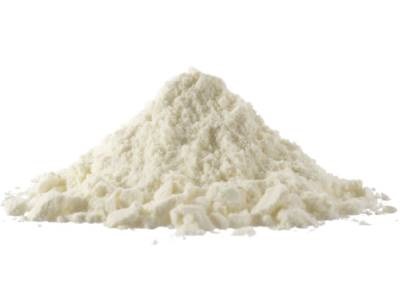
The study evaluated more than 300 production batches of the granulated lactose monohydrate functional excipient SuperTab 30GR (Figure 1). The material was produced by DFE Pharma at the company’s site in Nörten-Hardenberg, Germany, over the period from January 2011 to December 2017. The researchers used certificate of analysis (CoA) data as well as bulk and tapped density data to perform the MVA.
Umetrics Simca-P 16 software was used to generate a PCA model (or score plot) and a loading plot for the quantitative data. A Sympatec Helos dry powder laser diffraction analyzer was used to analyze the particle size distribution. Each sample was tested five times using an R5 lens. The materials’ bulk and tapped density were determined in triplicate using an Engelsmann instrument according to USP <616>, and its specific surface area (SSA) was determined using the multipoint SSA method. Differential scanning calorimetry (DSC) was performed using a Mettler Toledo DSC 1 instrument. The researchers accurately weighed 5 to 10 milligrams of material into a 40-microliter standard aluminum pan and then crimped on a pierced aluminum lid. Analysis was conducted from 20° to 250°C at 10°C per minute in triplicate. Thermogravimetric analysis (TGA) was performed using a Mettler Toledo instrument. The researchers accurately weighed 5 to 10 milligrams of material into a 40-microliter standard aluminum open pan. Analysis was conducted from 20° to 250°C at 10°C per minute in duplicate. The lactose excipient was mixed with 2 percent w/w superdisintegrant (Primojel, DFE Pharma) for 8 minutes and with 0.5 percent w/w magnesium stearate (Sigma Aldrich) a further 2 minutes using a Turbula mixer at 90 rpm. Placebo tablets were compressed at 10 kilonewtons using RoTab tableting equipment with a gravimetric feed and 9-millimeter flat beveled tooling. The target tablet weight was 250 milligrams (±0.5 milligrams). After 24 hours, 20 tablets were tested for hardness (F), diameter (d), and thickness (t) using a Sotax HT100 tablet hardness tester. Tablet tensile strength (TTS) was calculated using the following equation13:
TTS = 2F/(pi)dt
Tablet disintegration was tested in an Erweka DT dissolution tester. Disintegration times for six tablets were recorded in seconds, and the average disintegration time was used.
Results and Discussion
The PCA score plot is shown in Figure 2. As the figure shows, the R2(x) of the first two components was 0.298, meaning that there was little trend in the data, as 29.8 percent of the variation is explained by PC 1 and PC 2. The overlap between colors representing the different production years indicates that there was a high degree of similarity between batches from the years tested. Additionally, no clusters or shifts in the year-to-year data were observed.
Figure 3 shows the loading plot of the same dataset. The figure shows that the highlighted densities and particle-size parameters are the key contributors to the variation depicted in Figure 2. Other parameters, such as the specific rotation, moisture (by Karl Fischer titration), and the acidity of the lactose, did not vary significantly within the production data set.
Selection of batches for further evaluation
Specific batches were selected from the dataset to perform functional testing, as shown in Figure 4. To understand the variation observed, six batches were selected near or outside the Hotelling’s T2 95 percent confidence limit (represented by the blue ellipse in the figure). These batches are well suited for understanding the maximum variability delivered to users/customers and should be representative of the largest batch-to-batch variability. Two batches were taken from the midpoint of the spread in data (or knowledge space). Samples of these eight batches were taken from retained storage and further analyzed.
The particle size, bulk and tapped density, and specific surface area values for these batches are shown in Table 1. The particle size data for the eight selected batches indicates a high consistency for the product manufactured during the years studied. This is in alignment with the R2(x) values of PC 1 and PC 2 indicating that only 29.8 percent of the variation can be explained by the data (Figure 2). The particle size data are in agreement with Hagrasy, et al.14, and Moolchandani, et al. [15], which reported x50 values between 142 and 149 microns and an x90 value of 287 microns for this product. The bulk and tapped density range shows little variation, and the tapped densities are consistent with the literature15. The calculated Hausner ratios from the tested batches range between 1.20 and 1.25, indicating a fairly flowable powder. The specific surface area results did not show any significant differences between the batches tested.
The thermal data for the eight knowledge-space batches are shown in Table 2. These results are consistent with literature values, as the DSC traces did not show an exothermic event around 167° to 174°C associated with amorphous lactose16, 17. The DSC data show an endothermic transition event associated with the dehydration of the incorporated crystalline water between 140° and 145°C for all samples18, with subsequent melting of the alpha-anhydrous form (between 200° and 220°C) and decomposition of lactose19. The TGA shows a weight loss by dehydration of 4.5 to 4.6 percent, which is in alignment with literature values16.
Compaction and disintegration
The six knowledge-space batches that were near or outside the Hotelling’s T2 95 percent confidence interval show a low variability and, therefore, good consistency in terms of tablet compaction, reflected in the TTS values shown in Figure 5a. The TTS for all eight batches averaged around 1.56 to 1.69 megapascals, indicating a high consistency in tableting behavior. The disintegration time, as shown in Figure 5b, was around 60 seconds for all eight placebo batches, indicating good and constant disintegration properties. This implies that the batch-to-batch variation of this lactose type is unlikely to cause any variation in formulation development and production.
Conclusion
To help increase patient safety in a QbD context, it is of utmost important to understand the factors that may influence the functionality-related characteristics or critical material attributes of the final formulation. You could do this by testing all possible variables, but the design of experiments (DoE) for this would become unfathomable. Understanding which contributing variables pose the highest risk and which pose no risk can help to focus a DoE on the most important parameters. Excipients have been shown to introduce variability into a formulation, but this variability differs between excipients and even between suppliers of similar excipients. To make a good risk assessment, you must understand the variability of each individual excipient grade, and MVA is the preferable method for arriving at this understanding.
This study used MVA to evaluate more than 300 production batches of SuperTab 30GR granulated lactose monohydrate produced during the period from January 2011 to December 2017. Batches selected from the edges of the MVA plot—those having the maximum variation during the selected time frame—did not demonstrate any visible effect on the critical quality attributes of resulting lactose placebo tablets.
Due to the large number of degrees of freedom associated with a typical solid dosage form, the consistency of the ingredients alone may not be predictive of the finished product quality. However, pharmaceutical companies can evaluate the variability of high-consistency excipients as part of the control strategy, rather than DoE, to identify where there is a low probability of impact. Using well-controlled excipients designed for purpose can reduce life-cycle risk in pharmaceutical development and production. Excipients with low variation in physical/chemical size, density, and specific surface area, as in this study, may be classified as low risk, and companies may then use this classification to significantly reduce their DoE strategy when using such products in pharmaceutical development.
References
1. L. X. Yu, “Pharmaceutical quality by design: product and process development, understanding, and control,” Pharmaceutical Research, 2008, Vol. 25, No. 4, pages 781-791.
2. J. F. Gamble, et al., “Investigation into the degree of variability in the solid-state properties of common pharmaceutical excipients—anhydrous lactose,” AAPS Pharm- SciTech, 2010, Vol. 11, No. 4, pages 1,552-1,557.
3. J. Kushner, “Utilizing quantitative certificate of analysis data to assess the amount of excipient lot-to-lot variability sampled during drug product development,” Pharmaceutical Development and Technology, 2013, Vol. 18, No. 2, pages 333-342.
4. R. V. Haware, “Comparative evaluation of the powder and compression properties of various grades and brands of microcrystalline cellulose by multivariate methods,” Pharmaceutical Development and Technology, 2010, Vol. 15, No. 4, pages 394-404.
5. C. Moreton, “Functionality and performance of excipients in a quality-by-design world Part 2: Excipient variability, QbD and robust formulations,” American Pharmaceutical Review, 2009, Vol. 12, No. 2.
6. S. D. Novak, “The influence of HPMC viscosity as FRC parameter on the release of low soluble drug from hydrophilic matrix tablets,” Pharmaceutical Development and Technology, 2013, Vol. 18, No. 2, pages 343-347.
7. E. Doelker, et al., “Degrees of crystallinity and polymerization of modified cellulose powders for direct tableting,” Powder Technology, 1987, Vol. 52, No. 3, pages 207-213.
8. G. E. Amidon, et al., “The effect of moisture on the mechanical and powder flow properties of microcrystalline cellulose,” Pharmaceutical Research, 1995, Vol. 12, No. 6, pages 923-929.
9. G. Thoorens, et al., “Understanding the impact of microcrystalline cellulose physicochemical properties on tabletability,” International Journal of Pharmaceutics, 2015, Vol. 490, No. 1, pages 47-54.
10. A. P. Ferreira, et al., “Multivariate analysis in the pharmaceutical industry: enabling process understanding and improvement in the PAT and QbD era,” Pharmaceutical Development and Technology, 2015, Vol. 20, No. 5, pages 513-527.
11. M. Tobyn, “Back page: Excipient variability: Mostly a fuss,” Tablets & Capsules, September 2015.
12. G. A. Hebbing and B. H. J. Dickhoff, “Application of lactose in the pharmaceutical industry,” Chapter 5 in Lactose—Evolutionary role, health effects, and applications, Academic Press, 2019, pages 175-229.
13. J. M. Newton, et al., “The strength of tablets of mixed components,” Journal of Pharmacy and Pharmacology, 1977, Vol. 29, No. 1, pages 247-249.
14. A. S. El Hagrasy, et al., “Twin screw wet granulation: Influence of formulation parameters on granule properties and growth behavior,” Powder Technology, 2013, Vol. 238, pages 108-115. 15. V. Moolchandani, et al., “Characterization and selection of suitable grades of lactose as functional fillers for capsule filling: part 1,” Drug Development and Industrial Pharmacy, 2015, Vol. 41, No. 9, pages 1,452-1,463.
16. H. Listiohadi, et al., “Moisture sorption, compressibility and caking of lactose polymorphs,” International Journal of Pharmaceutics, 2008, Vol. 359, No. 1-2, pages 123-134.
17. A. Combas, et al., “Quantitative determination of crystallinity of α-lactose monohydrate by DSC,” Journal of Thermal Analysis and Calorimetry, 2002, Vol. 68, No. 2, pages 503-510.
18. E. Berlin, “Calorimetric measurement of the heat of desorption of water vapor from amorphous and crystalline lactose,” Thermochimica Acta, 1971, Vol. 2, No. 2, pages 143-152. 19. M. D. Ticehurst, et al., “Characterisation of the surface properties of α-lactose monohydrate with inverse gas chromatography, used to detect batch variation,” International Journal of Pharmaceutics, 1996, Vol. 141, No. 1-2, pages 93-99.
B. H. J. Dickhoff is development manager, oral solid dose; T. Schigt is research specialist; H. L. Blaauw is category manager, marketing; and A. W. van Gessel is regional sales and marketing manager, Japan, at DFE Pharma (+492823 9288 770, www.dfepharma.com).