 Scott Tacheny Wilson Tool
For manufacturers, downtime is a necessary evil. It’s when production stops so you can clean and maintain your machinery and change over the tooling. Ideally, downtime would be scheduled and occur between tabletting runs, but some problems occur with no warning.
In addition, consumer trends put formulators and marketers under pressure to change the shape, size, and overall look of tablets to enhance their appeal. These changes eventually flow to the people involved in manufacturing, forcing them to adapt quickly to make new tablets that may not run as easily on the press.
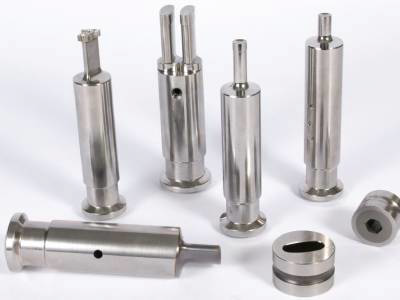
This article describes some cost-effective ways manufacturers can respond to unforeseen trouble and meet other demands while boosting production and minimizing downtime. They include establishing baselines for tooling performance, identifying tooling failure modes, and specifying different tool steels and coatings.
Tooling Performance Baselines
How long does a tool last in a particular compression application? What is the overall service life of the tool? How frequently must a tool be changed out? Answering these and similar questions can help you establish the value of a tool and validate its worth. Next, you can calculate the true and complete cost of the tool by factoring in the labor, maintenance, and cleaning it requires and the cost of replacement.
These calculations establish baselines that give you a realistic picture of overall costs when considering tooling purchases. When thinking about costs, it’s common to think only about the price of the tool, and because compression tooling can be expensive, it’s easy to shy away from higher-end versions. But does the expense really justify paying a low price for a lower-quality tool that wears quickly or breaks more frequently? To find out which is a better value, you need to factor in the additional costs of lost production, labor, and maintenance. In the end, the “inexpensive” tool could cost greatly more than a high quality, higher-priced tool that lasts longer and gives you fewer problems.
Consider, for example, a tablet press that holds 31 sets of tools—62 punches and 31 dies. Replacing the entire set with higher-quality tools would be a large investment for some companies and that expense may not fit the budget. Plus, it’s difficult to know whether buying better tools will really improve your operation. The best approach here might be a compromise: Buy just a few of the high-quality tools—those made from better steel and/or with a special coating—and integrate them with your standard tools so you can monitor and compare their performance. This technique can help you identify which tools perform best and establish baselines for future purchases so you can stick to the budget.
Tool Steels, Coatings, and Failure Modes
The combinations of tool steels and coatings are virtually limitless, so it’s important that you determine the right option, which is often a trial-and-error process. But it doesn’t have to be a blind process. By identifying the failure mode of a tool, you can start to determine the best tool steel and/or coating for a particular application.
Wear is the most common and expected source of tool failure, and premature wear often spurs people to seek a better tool steel. If you determine that a tool is wearing due to abrasion, for example, you should seek a tool steel that resists it and then track how much longer the new tool lasts and how much downtime it eliminates. If a tool fails due to fatigue, then yet another tool steel might be warranted. Again, track the performance of the new tool to quantify the improvement to your operation.
If you can’t determine why a tool has failed—it isn’t always easy—ask a steel specialist to perform a more detailed analysis. Once the failure mode is identified, ask the specialist to suggest alternative steels that would perform better in that application.
A less expensive option for prolonging tool service life and reducing downtime is to add a coating to the tool. By adding a coating—even to a lower-quality tool—you can increase wear resistance. A coating can also reduce the coefficient of friction, and thus decrease or eliminate sticking and picking. The right coating might boost production efficiency and prolong the life of the tool.
Other Challenges
Consumer demand determines what companies manufacture, and the pharmaceutical and dietary supplement industries are no exceptions. Many people, especially the elderly, want smaller tablets that have the same effect. Parents want vitamins shaped like teddy bears and giraffes so their kids are more willing to take them. And most consumers want tablets that are sleek with crisp edges. The list of consumer desires goes on and on.
The unfortunate reality for tablet manufacturers is that consumer demands can bring significant production challenges. In developing smaller tablets, for example, pharmaceutical companies may need to decrease the use levels of some excipients. That could lead to a more abrasive formula or one that sticks or delaminates. Making special shapes, such as animals, requires expensive custom tools. Sleek, crisp tablet edges can lead to premature tool wear. These changes, in turn, can necessitate other changes downstream, adding to the costs.
Before making plans for new tablets, consult the production guidelines in the American Pharmacists Association’s Tableting Specification Manual. It establishes protocols for tablet design and the corresponding tools and offers guidelines for making tablets more easily, extending tool service life, and boosting production efficiency.
Creative Problem Solving
When faced with a manufacturing challenge, brainstorm a little and see if you can find a workaround. For example, if you want to make tablets that look like a bear or giraffe but custom tooling isn’t in the budget, why not put the animal shape on the face of the tablet? That way you won’t have to change the tablet shape dramatically and you won’t spend a fortune on special tooling or discover some problem that puts the entire production process at risk.
To minimize downtime during changeovers and cleaning, schedule production so that similarly formulated tablets are made back to back. For example, some tablets comprise the same basic ingredients, differing only in the amount of active. In that case, there may be no need to break down the entire setup for cleaning between runs.
Finally, to save money while boosting performance, consider specifying a hybrid tool that incorporates two different types of steels. In applications that involve corrosive ingredients, for example, a stainless steel tool would reduce sticking and tool breakage. While using stainless steel can increase the price of tooling tenfold, a hybrid would reduce that amount. One option is to use a two-piece tool that allows you to press-fit a high-end steel tip into a body made from a less expensive steel. In this scenario, the working end of the tool provides corrosion and abrasion resistance at a much lower cost than if the tool were made entirely of high-end steel.
Scott Tacheny is tablet tooling product manager at Wilson Tool International, 12912 Farnham Avenue North, White Bear Lake, MN 55110. Tel. 651 286 6000. Website: www.wilsontool.com. Tacheny has worked at Wilson Tool, a global tooling manufacturer, for 29 years.