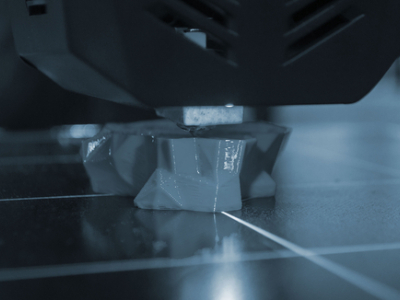
Probably best known for being used to make gimmicky horror movies and for those cheaply made cardboard glasses with red and green lenses, 3D technology has been around for a long time. The technology traces its roots back to the early 19th century when the concept of stereoscopy emerged. Stereoscopy involves creating two slightly different images viewed through a device to produce a 3D effect. Since the 50s, the use of 3D technology for movies has come and gone, perhaps reaching its peak with James Cameron’s movie Avatar in 2009. Television manufacturers and movie studios tried, for a while, to convince us that watching 3D movies at home was going to be the next “big thing”. But the cost and the inconvenience of wearing 3D glasses/headsets at home doomed the effort.
Now, let’s shift our focus to a different 3D innovation - 3D printing. The origins of this technology can be traced back to the 1980s when Chuck Hull invented stereolithography, a process that laid the foundation for modern 3D printing. This revolutionary technique allowed for the creation of three-dimensional objects by layering materials on top of each other based on digital designs. From rapid prototyping in industries to personalized manufacturing, 3D printing has transformed various sectors with its versatility and efficiency.
Recently, the pharmaceutical industry has embraced 3D technology to enhance drug delivery systems and manufacturing processes. One notable application is the production of pharmaceutical tablets using 3D printing techniques. This innovative approach enables precise control over drug composition, dosage, and release profiles, leading to personalized medication tailored to individual patient needs. By utilizing 3D printing, pharmaceutical companies can streamline production, reduce waste, and improve drug efficacy.
There is even talk of installing pharmaceutical 3D printing machines in pharmacies – for the ultimate personalized dosage form. In theory, you could watch your medicine made right before your eyes. No 3D glass is required!
Author Details
Mike Auerbach, Editor in Chief - Tablets & Capsules
Publication Details
This article appeared in Tablets and Capsules Magazine: Vol. 22, No. 2March/April 2024Page: 6