Two years after the FDA approved Wegovy, Novo Nordisk’s CEO told CNN that the demand for the injectable weight-loss drug was still so great it could take “quite some years” for the drugmaker to meet it.1
In 2024, Novo Holdings paid $16.5 billion to acquire CDMO giant Catalent, then immediately sold three of Catalent’s sterile fill-finish sites back to Novo Nordisk (now Novo) for $11 billion, specifically to add filling capacity for Ozempic and Wegovy.2 Novo also invested $6.8 billion in U.S. manufacturing expansions from 2021-2025 to address Wegovy production capacity.3
Meanwhile, Eli Lilly, which won FDA approval for its rival weight-loss injectable, Zepbound, in November 2023, began what CEO David Ricks later called “the most ambitious expansion plan in our company’s history.”4 Lilly’s own announcements add up to more than $20 billion across five sites for new construction and expansion projects to support manufacturing of parenteral GLP-1 ingredients, products and devices used to administer them.5
The injectable weight-loss drug boom didn’t just strain the two drugmakers with approved products. It reshaped the entire pharma ecosystem, forcing suppliers and manufacturers to reorganize around GLP-1s. CDMOs with available fill-finish capacity became scarce, with wait times reaching up to two years, while programs outside the GLP-1 space struggled to secure manufacturing slots. Adjacent supply chains also felt the pressure. Device manufacturing capacity for products such as autoinjector pens became difficult to secure, and drugmakers in some cases faced lead times of 12–18 months for manufacturing equipment.6
This backlog should come as no surprise. More than one billion people worldwide — 12% of the global population — are estimated to be living with obesity.7 Because obesity is a major risk factor for conditions including cardiovascular disease, diabetes, cancer, neurological disorders, chronic respiratory diseases and digestive disorders, it ranks among the world’s most pressing public health challenges.
Despite demand massively outstripping supply, Novo and Lilly’s injectable GLP-1 receptor agonists represent a revolution in medicine, shifting obesity care from a matter of willpower to targeted physiological treatment. But the need for weight-loss drugs remains far from fulfilled, and the rush is far from over.
“Demand for effective obesity medicines is broad enough to support more than two suppliers, multiple mechanisms, and several dosage forms,” says Doug Hausner, Ph.D., Life Science SME and OSD Specialist for CRB Group, a facility design, engineering, construction and consulting firm.
In December 2025, Novo won approval for an oral tablet version of Wegovy. A few months later, Lilly followed with approval for its rival tablet, Foundayo (orforglipron). For many patients, this shift from needle to pill was a long-awaited innovation, offering a weight-loss alternative that is more convenient, potentially more affordable and, importantly, needle-free.
The development raised a tantalizing possibility: The weight-loss holy grail might not be an injectable at all, but an easy-to-swallow tablet.
“Oral products are likely to expand the treated population by reducing needle aversion, simplifying distribution, and fitting more naturally into primary-care prescribing and long-term use,” says Hausner. “They may also support more differentiated product profiles, including varying efficacy, tolerability, dosing convenience, cost and combination strategies.”
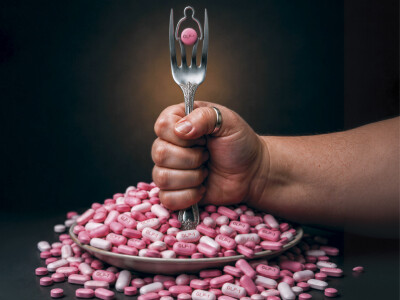
Combined, those possibilities risk a new kind of pressure on the oral solid dose ecosystem. Can OSD digest the GLP-1 demand more gracefully than sterile injectable manufacturing did — or is another manufacturing crunch already on the menu?
The Table is Set
Wegovy and Foundayo have been on the market for less than a year, and both drugmakers are reporting fast-growing uptake of the daily tablets.
According to Novo’s third quarter earnings,8 Wegovy tablets hit more than 265,000 total weekly U.S. prescriptions for the week ending July 17, 2026, and more than five million cumulative U.S. prescriptions since launch. The pill is also approved and launching in the European Union and United Arab Emirates.
Comparable numbers for Foundayo are not available but Ricks has publicly stated that more than 20,000 people began taking the pill in the first few weeks after its launch.9 By its August Q2 earnings call, Lilly said it had 36,000 prescribers writing Foundayo scripts, claiming the company was “almost doubling the volume that we had just a month ago.”10 Abroad, the tablets are approved and launching in the UK and United Arab Emirates.
Both drugmakers are betting on growth, with capacity investments and inventory planning helping ensure that this time, they’re ready to meet demand.
Novo will manufacture Wegovy pills for the U.S. at its North Carolina facilities in Clayton and Durham, the latter of which was purchased from Purdue in August 2019 specifically to manufacture oral semaglutide tablets for type 2 diabetes.11,12 In terms of ex-U.S. supply, Novo invested $501 million to add a new tableting plant at its facility in Athlone, Ireland, and will also produce oral Wegovy at a facility in Denmark.13
“We have a strong, reliable supply of Wegovy pill,” Novo’s Vice President of U.S. operations Dave Moore told media outlets prior to the January 2026 launch. “We planned ahead, and over the years have made significant multibillion-dollar investments in building production capacity.”14
Lilly also hedged its bets, stockpiling approximately $1.5 billion worth of “pre-launch inventory” of Foundayo far in advance of its April 2026 regulatory approval.15 Lilly has also committed billions to oral manufacturing capacity for Foundayo, including $6 billion for an API facility in Huntsville, Alabama; $6.5 billion for another in Houston, Texas; a $1.2 billion-plus expansion in Puerto Rico; and a new $3 billion oral medicines facility in the Netherlands.16,17,18,19
Bringing the first two oral GLP-1s to market, Lilly and Novo moved early to secure a foothold in manufacturing capacity, giving them a head start as demand continues to build. With both players initially keeping manufacturing in house, CDMOs aren’t seeing a repeat of the injectables rush to lock in capacity. But that doesn’t mean it isn’t coming.
“Large pharma is keeping that initial stock and launch to themselves because they want more control over the supply chain,” says David O’Connell, Director of Scientific and Technical Affairs, PCI Pharma Services. “Over time, I think that will change. That’s not their business model in other therapeutic areas either. Once smaller biotech companies get involved, because they generally don’t have the capacity, they’ll also look to outsource.”
PCI Pharma Services, a global CDMO with capabilities in both sterile injectables and OSD products, was among the CDMOs supporting the weight-loss injectable boom, including through assembly of self-injection pens for Wegovy. The company recently unveiled a $1+ billion investment across the U.S. and Europe to expand its sterile fill-finish and drug-device combination capabilities.20
“We understand the issues that GLP-1 had on the sterile injectable and delivery side. Even if they’re not the same molecules, we can apply the principles of product development and manufacturing to the oral side as well,” says Anshul Gupte, Ph.D., Vice President of Pharmaceutical Development for PCI.
What’s Cooking in the Market
The broader U.S. obesity-drug market is expected to exceed $100 billion annually by 2030, with oral treatments potentially accounting for more than one-third of GLP-1 use.21 Ozmosi’s drug intelligence platform is currently tracking more than 150 active programs across obesity and weight-related indications, spanning preclinical development through phase 3.22
With competitors — from big pharma to emerging biotechs — hungry for a piece of this king-sized therapeutic opportunity, it may just be the tip of the iceberg for oral weight-loss drugs.
“It’s still early days for oral tablets,” notes Gupte. “As with any therapeutic class, you expect once large pharma establishes the market, the small and mid-sized players come in and really take advantage of the opportunities that creates.”
Despite the demand and having the benefit of watching weight-loss titans Novo and Lilly translate lessons from the clinic to commercial launch, success is not guaranteed for fast-follower oral drugs.
“I would separate the size of the therapeutic opportunity from the number of products that will ultimately succeed,” says Hausner. “Not every oral GLP-1 candidate will become a high-volume commercial product.”
Big pharma companies like Pfizer, Merck, Amgen, AstraZeneca and Roche have committed billions of dollars through aggressive internal pipelines and acquisitions — with varying success. Pfizer, for example, halted its internally developed obesity pill lotiglipron in 2023 after reports of elevated liver enzymes in trial patients, shifting its focus to another oral candidate, danuglipron.23 Two years later, Pfizer scrapped danuglipron after a phase 2 participant suffered liver injury, following earlier tolerability issues that had already prompted a formulation change.24 Pfizer then looked outside the company, beating out Novo in a bidding war to acquire Metsera in a deal worth approximately $10 billion.25 The deal brought an oral GLP-1 candidate, MET-224o, into Pfizer’s pipeline, but the drug was later discontinued as Pfizer redirected resources toward Metsera’s monthly injectable candidate.26
With two safe and efficacious oral products already established on the market, this second wave of oral drugs must address the limitations of the first-gen drugs, while also establishing a manufacturing plan capable of supporting commercial demand.
“As is always the case in a therapeutic space, new entrants must demonstrate meaningful clinical value, reliable supply, acceptable tolerability, and a commercial position that is distinct from increasingly established injectable and oral competitors,” says Hausner. “Manufacturing strategy will therefore matter earlier than it has for many traditional OSD launches. Companies will need credible plans for API, formulation, drug-product capacity, packaging, and geographic supply resilience before demand is fully visible.”
Smaller, clinical-stage innovators are also vying for market share. Viking Therapeutics is planning to start phase 3 trials of oral VK2735, a peptide dual GLP-1/GIP agonist, in Q4 2026.27 Structure Therapeutics currently has two phase 3 trials underway for its oral, small-molecule GLP-1, aleniglipron, with a data readout expected at the end of 2028.28
During a recent Morgan Stanley 24th Annual Global Healthcare Conference presentation, Structure’s CEO and Director, Raymond Stevens, praised the Lilly and Novo oral GLP-1 rollouts, calling them “fantastic launches.” He also reiterated the importance of manufacturing strategy.29
“When we designed the molecule [aleniglipron], obviously efficacy, safety, tolerability was top of mind. But what was also on our mind was manufacturing. Could we make the manufacturing as streamlined and as simple as possible so we could truly get the cost of goods down as low as possible so we could address a very large global unmet need?” said Stevens.
With the bar for commercial success high, new market entrants will need to truly distinguish themselves.
“I do think this is the beginning of a much broader category. The market will likely be large, but also technically and commercially selective,” says Hausner. “The winners will be the products that combine clinical performance with scalable, dependable, and economically sustainable supply.”
A Simpler Recipe
For manufacturers, the move from injectable to oral weight-loss drugs could come with several economic and operational advantages. To begin with, if additional infrastructure is needed, adding it is typically quicker and cheaper than building sterile fill-finish capacity.
“OSD capacity is generally faster and less capital-intensive to establish than sterile fill-finish because it does not require aseptic processing, isolator-based filling, sterilization systems, or the same clean room and contamination-control infrastructure,” says Hausner. “Existing OSD facilities may also be adaptable through debottlenecking, equipment replacement, shift expansion, or targeted additions. That gives manufacturers more options than a ground-up sterile facility.”
The manufacturing processes and equipment needed for oral drugs also tend to be less complex.
“With orals, you can develop products and manufacture them a lot quicker than you can in the sterile environment. With most oral GLP-1s, it’s a fairly traditional manufacturing process and most companies that work in OSDs will have the technology,” says O’Connell.
Yet, if oral GLP-1s come anywhere close to matching their injectable predecessors in demand, manufacturers may be working from a simpler recipe, but the volume will still test its limits. “We don’t expect the need for CDMOs to invest heavily into new technology. The only investment might come downstream, if the volume is so large that they can’t handle it,” says Gupte.
A high, sustained demand for oral drugs could also strengthen the case for continuous manufacturing. In Hausner’s opinion, the multiple formulation changes or complex bioavailability-enhancement steps that have so far characterized oral weight-loss drugs may favor a more hybrid architecture. “Continuous feeding, blending, granulation or compression could solve a specific bottleneck while spray drying, coating, or packaging remains batch or semi-continuous.”
There is an important caveat to the oral weight-loss drug story: While Lilly’s Foundayo and Novo’s Wegovy are both tablets, they represent opposite bets on how to solve oral GLP-1 delivery, and each comes with its own trade-offs.
The Wegovy tablet is an oral peptide whose bioavailability depends on a proprietary SNAC absorption enhancer that helps transport the molecule across the gastrointestinal tract. Because food or water in the stomach can block SNAC from working, the pill comes with fasting and water-timing restrictions. What that inconvenience buys, though, is continuity with a molecule (semaglutide) — the same active ingredient in Ozempic and injectable Wegovy — that already has years of real-world use and an FDA-approved cardiovascular risk-reduction claim behind it. Foundayo, by contrast, is a genuinely new small molecule; no fasting requirements, but also without semaglutide’s track record.
The manufacturing challenges also diverge. A non-peptide small molecule generally enters a familiar OSD framework, explains Hausner. “API receipt and dispensing, blending or granulation, compression, coating if required, and packaging,” he says. “But an oral peptide adds a different upstream supply chain and formulation challenge. Peptide API manufacture can involve complex synthesis, purification, solvent handling, and final isolation. At the drug-product stage, the peptide may be low-dose and sensitive to moisture, temperature, shear, or degradation.”
A Deconstructed Bottleneck
When injectable GLP-1s took off, the industry hit a single, identifiable wall in sterile fill-finish capacity. For oral GLP-1s, there may not be one universal equivalent.
“For oral GLP-1 products, the constraint is likely to be molecule- and formulation-specific,” says Hausner. “For a small-molecule product, API synthesis and the supply of key intermediates may be more difficult to scale than tablet compression. For an oral peptide, peptide API supply, purification, final isolation, and a specialized absorption enhancer likely dominate.”
Essentially, the bottleneck doesn’t disappear; it fragments. It will be distributed and molecule-specific — but this doesn’t mean the industry can’t get out ahead of it. Doing so involves modeling the full value stream for each molecule, from raw material to packaged tablet, before demand forces the question.
“For oral GLP-1s, the most useful early work is often a product-to-facility translation: define the molecule and formulation basis, test realistic demand scenarios, identify the constrained unit operations, and then compare brownfield, greenfield, and external manufacturing options,” says Hausner.
While perhaps a less dramatic story than a multibillion-dollar fill-finish buildout, these molecule-by-molecule constraints are potentially easier to identify and plan for in advance, giving drugmakers a chance to get ahead of demand rather than be left chasing it.
References
- Tirrell, M. (2023, September 5). Ozempic and Wegovy maker ‘just scratching the surface’ in meeting demand for weight loss drugs, CEO says. CNN.
- Catalent. (2024, December 18). Novo Holdings completes acquisition of Catalent. [press release]
- FormBlends Editorial Research. (2026, May 1). Where is Wegovy manufactured? The complete supply chain from raw materials to your refrigerator. FormBlends.
- Eli Lilly and Company. (2024, April). Q1 2024 earnings call.
- Author's calculation based on Eli Lilly announcements regarding manufacturing investments in Concord, North Carolina; Alzey, Germany; Pleasant Prairie, Wisconsin; Lebanon, Indiana; and Fogelsville, Pennsylvania.
- Wertheim, A. (2026, May). Interview: GLP-1 demand and the new reality of device manufacturing capacity. ONdrugDelivery. 186. 10-13.
- World Obesity Federation. Prevalence of obesity. World Obesity. [accessed: Sept. 2026]
- Novo Nordisk. (2026, August 4). Novo Nordisk reports adjusted operating profit of DKK 33,389 million for Q2 2026 and raises full-year outlook. [press release]
- Peebles, A. (2026, April 30). More than 20,000 people are taking Eli Lilly’s weight loss pill Foundayo, CEO says. CNBC.
- The Motley Fool. (2026, August 12). Eli Lilly Q2 2026 earnings call transcript.
- Coffey, S. (2026, January 5). New pill form of weight-loss drug Wegovy to be manufactured in the Triangle. ABC11 Raleigh-Durham.
- Schott, P. (2019, August 5). OxyContin maker Purdue Pharma to close North Carolina facility. Stamford Advocate.
- Novo Nordisk. (2026, March). Novo Nordisk announces more than 400 million euro expansion in its manufacturing facility in Athlone, Ireland. [press release]
- Gordon, B. (2025, December 23). Novo Nordisk gets landmark obesity pill approved, with production ‘underway’ in NC. The News & Observer.
- Eli Lilly and Company. (2026). Annual report on Form 10-K for the fiscal year ended December 31, 2025.
- Eli Lilly and Company. (2025, Dec). Lilly to build $6 billion facility to manufacture active pharmaceutical ingredients in Alabama. [press release]
- Eli Lilly and Company. (2025, September 23). Lilly plans to build a new $6.5 billion facility to manufacture active pharmaceutical ingredients in Texas. [press release]
- Eli Lilly and Company. (2025, October 29). Lilly announces more than $1.2 billion investment in Puerto Rico facility to boost oral medicine manufacturing capacity. [press release]
- Eli Lilly and Company. (2025, November 3). Lilly plans to build a new $3 billion facility to boost oral medicine manufacturing capacity in Europe for patients worldwide. [press release]
- PCI Pharma Services. (2026, April 27). Backed by investments exceeding $1 billion, PCI Pharma Services announces major expansion of US sterile fill-finish and drug-device delivery combination capabilities. [press release]
- Gill, V. (2026, September 15). Lilly’s Foundayo quickly gains ground in the oral weight-loss market. Yahoo Finance.
- Bush, B. (2026, August 17). The obesity drug pipeline in 2026: Emerging targets, companies and clinical readouts. Ozmosi.
- Pfizer. (2023, June 26). Pfizer provides update on GLP-1-RA clinical development program for adults with obesity and type 2 diabetes mellitus.[press release]
- Pfizer Inc. (2025, April 14). Pfizer provides update on oral GLP-1 receptor agonist danuglipron. [press release]
- Pfizer Inc. (2025, November 13). Pfizer completes acquisition of Metsera. [press release]
- Taylor, N. P. (2026, August 4). Pfizer axes ex-Metsera obesity asset and GIPR prospect in quarterly clearout. Fierce Biotech.
- Napitupulu, J. (2026, July 30). Viking Therapeutics advances VK2735 oral program into Phase 3 trials. Clinical Trial Vanguard.
- Structure Therapeutics. (2026, September 8). Structure Therapeutics reports positive clinical data across oral small molecule amylin and GLP-1 programs for chronic weight management. [press release]
- Seeking Alpha. (2026, September 16). Structure Therapeutics presents at Morgan Stanley 24th Annual Global Healthcare Conference transcript.