
The majority of molecules in the drug development pipeline fall into Biopharmaceutical Classification System (BCS) Class II or IV, exhibiting poor aqueous solubility that limits active pharmaceutical ingredient (API) bioavailability. This challenge is often addressed by creating amorphous solid dispersions (ASDs) of the API in a polymeric matrix using either thermal methods, such as hot-melt extrusion, or solvent-based methods, such as spray drying. Between 2012 and 2023, for example, the FDA approved 48 drug products containing ASDs.¹ An increasing number of new small-molecule drug substances intended for oral solid dosage formulations exhibit greater molecular size and structural complexity than earlier compounds, further driving the need for ASDs.
Spray drying is the most widely used method for manufacturing ASDs. In this process, the drug substance and a dispersing polymer (excipient) are co-dissolved in a suitable solvent system, and the solvent is evaporated to form the ASD. Spray drying is well suited for temperature-sensitive molecules because evaporative cooling helps protect the API during drying. It also enables particle engineering, allowing process conditions to be adjusted to achieve targeted particle properties. Spray drying is advantageous in preclinical development, where computational tools support rapid formulation screening using limited quantities of drug substance. The method is also scalable and effective for clinical and commercial production.
Computational Design in Preclinical
One of the first challenges in the development and manufacturing of ASDs by spray drying is the selection of a suitable solvent system. Many new molecule entities have low solubility not only in water, but also in many organic solvents. These are aptly nicknamed “brick dust” molecules. Low solubility in the solvent system can limit spray-drying throughput and lead to high solvent consumption, which adds cost and may increase environmental impact. Identifying a good solvent system is crucial. Likewise, identifying an appropriate dispersing polymer for the ASD is equally important.
There are thousands of possible combinations of solvents, dispersing polymers, and excipients, including surfactants, that can be used in ASD formulations. During preclinical development, computational tools and high-throughput screening can accelerate initial spray-dried ASD formulation while reducing material use and development risk. In silico approaches can rapidly assess multiple solvents and solvent mixtures for a given API. Hansen solubility parameters are commonly used to rank solvent systems, and when API solubility data are available across at least five solvent systems, the Perturbed Chain Statistical Associating Fluid Theory (PC-SAFT) model can be applied to predict API solubility across different solvents and temperatures.2,3
For formulation screening, advanced software models based on Flory-Huggins theory can identify excipient candidates with a higher probability of forming stable, homogeneous mixtures with the API I.4-6 Maximum drug loading achievable with each polymer can also be estimated using these models. In addition, tools that account for the dynamics of droplet formation and drying behavior can be used to estimate the risk of phase separation during spray drying for each formulation.
High-Throughput Screening
After this initial screening, spray-dried prototypes of the most promising formulations can be manufactured with just a few grams of API using customized, lab-scale, high-throughput equipment. Using equipment that operates under conditions that represent actual spray drying conditions results in more realistic prototypes than proxy processes, such as solvent casting. Using high-throughput spray drying, multiple formulation prototypes can typically be manufactured in less than a week. The performance and stability of the prototypes is then evaluated initially and under accelerated conditions to obtain a relative comparison between the formulations. The combination of computational tools to narrow down the formulation space with realistic prototype manufacturing helps identify formulations with high potential for success faster, consuming less material and eliminating the need for reformulation in later stages of development.
Polymer Selection
Polymer selection is critical to ASD formulation. It must balance several needs: maximizing API loading with sustained supersaturation, while ensuring physical and chemical stability throughout the product’s shelf life. Poorly soluble APIs often require a high API amount which, when combined with the excipient, can result in larger tablet sizes that may be more difficult for patients to swallow.
Typical polymers used for ASDs include HPMCAS, HPMC and PVP-VA.7 A novel beta-lactoglobulin (BLG) excipient, which can be used as an alternative to conventional polymers in ASDs, has been demonstrated to allow improved drug loads of up to 70% without compromising physical stability or performance.8 This novel excipient, a naturally derived component of milk whey protein, may also support life cycle management for marketed drugs by helping extend patent protection.
Optimizing for a Low Carbon Footprint
Carbon footprint is increasingly important in process design as companies seek to minimize environmental impact and, in some regions, avoid penalties tied to carbon emissions. In spray drying, the type and quantity of solvent can significantly affect carbon footprint through both the energy required for solvent evaporation and the solvent’s life-cycle impacts, from raw material extraction through use and disposal or post-use treatment.
Solvent-related carbon footprint should be optimized early in process development, soon after candidate formulations are shortlisted. This involves optimizing the solvent system, solids loading, and spray drying conditions for each formulation. Alternative solvent systems should also be evaluated at this stage, since changing solvents later in clinical development can introduce regulatory hurdles and delay the program.
Facilitating Scale-Up
Early clinical stages will generally make use of smaller spray drying units, while late stage and commercial programs rely on larger equipment to deliver the required higher amounts. Transitioning between scales can be resource-intensive and time-intensive without the proper processes, methodologies and tools. These include computational models that simulate the processes at different scales, advanced lab spray drying that replicates drying conditions in R&D settings, and streamlined methodologies that combine all of these tools.
For instance, particle size and bulk density are key physical attributes that should be well understood and maintained during scale-up because they will impact the final product quality attributes. Mechanistic models based on heat and mass balance and liquid-vapor equilibrium equations, together with atomization models based on nozzle characteristics and feed solution properties, can be used to define the manufacturing space that meets all required criteria. These mechanistic models can be combined with statistical models built from lab-scale process development data to establish product-specific scale-independent correlations (Figure 1).
Bulk density usually correlates with drying kinetics, which can be determined from the relative saturation of the gas at the outlet of the spray dryer or from the heat-mass transfer ratio. Particle size usually correlates with estimated droplet size. Together, these data and relationships guide adjustment of spray-drying conditions and equipment settings to obtain the desired particle size and bulk density at each scale.
To enable a seamless scale-up, it is also key to evaluate the physical and chemical stability of the feed solution and wet intermediate material during hold times, as well as product degradation upon exposure to stress conditions. A manufacturer with a large knowledge base and data collected in a standardized manner will be able to use the data and their experience to reduce development time and material consumption by achieving the desired properties in fewer iterations. This streamlined scale-up and technical transfer process minimizes risk to supply timelines.
Downstream Processing of ASDs
ASDs are typically formulated as oral tablets, but their formulation presents challenges distinct from those of crystalline APIs. These arise from the presence of the carrier polymer — often in higher proportion than the API. The typical high ASD load, combined with markedly different material properties, limits the applicability of platform-based tablet development approaches commonly used for low-drug-load crystalline formulations.
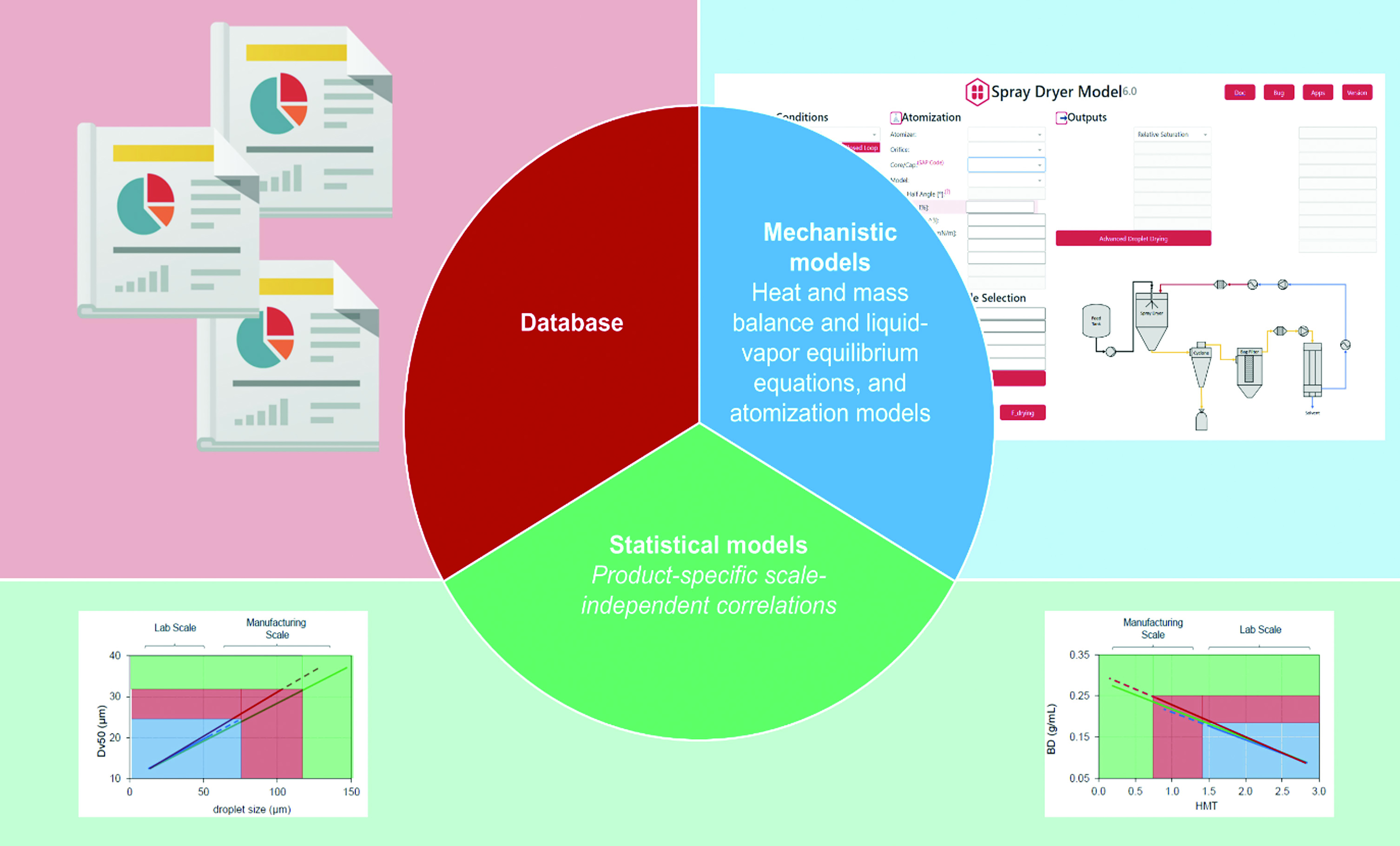
Figure 1: Integration of mechanistic and statistic models with knowledge database for streamlined scale-up.
In addition, ASDs are generally hygroscopic and moisture-sensitive, precluding the use of wet granulation typically employed to improve mechanical properties in crystalline systems. Given the strong influence of ASD properties on downstream processing and bioavailability, close integration of intermediate process development with formulation and final drug product manufacturing is critical to fully realize therapeutic potential. Applying Quality by Design (QbD) tools enables efficient development by systematically capturing interactions among variables and reducing overall development time and effort.
An Integrated Approach
Spray-dried ASDs are increasingly used to improve bioavailability for complex new molecules, making efficient process development tools and methodologies essential for accelerating commercialization. Modeling tools and advanced lab-scale spray drying equipment have proven effective as an integrated approach for developing robust formulations and streamlining scale-up with fewer development iterations. A deep understanding of how formulation and process conditions affect ASD properties — and how those properties influence tableting performance and bioavailability — is also critical to successful and faster commercialization of ASD products.
References
- Moseson, D., et. al. (2024). Trends in amorphous solid dispersion drug products approved by the US FDA between 2012 and 2023. International Journal of Pharmaceutics. 7:100259.
- Hansen, C. (2007). Hansen Solubility Parameters: A User’s Handbook. 2nd ed. CRC Press.
- Luebbert, C., et. al. (2018). Choosing appropriate solvents for ASD preparation. Molecular pharmaceutics.15 (11). 5397-5409.
- Flory, P. (1942). Thermodynamics of High Polymer Solutions. Journal of Chemical Physics. 1 (1). 51-61.
- Huggins, M. (1941). Solutions of Long Chain Compounds. Journal of Chemical Physics. 9(5). 440.
- Tian, Y., et. al. (2013). Construction of Drug-Polymer Thermodynamic Phase Diagrams Using Flory-Huggins Interaction Theory. Molecular Pharmaceutics. 10(1). 236-248.
- Sonal, V., et. al. (2021). Pharmaceutical Amorphous Solid Dispersion: A Review of Manufacturing Strategies. Acta Pharmaceutica Sinica B. 11(8). 2505-2536.
- Ramos, I. (2022, Oct). Recent Advances in ASD Formulations: HIPROS and Dispersome. [Poster presented at: AAPS 2022, Boston, MA]